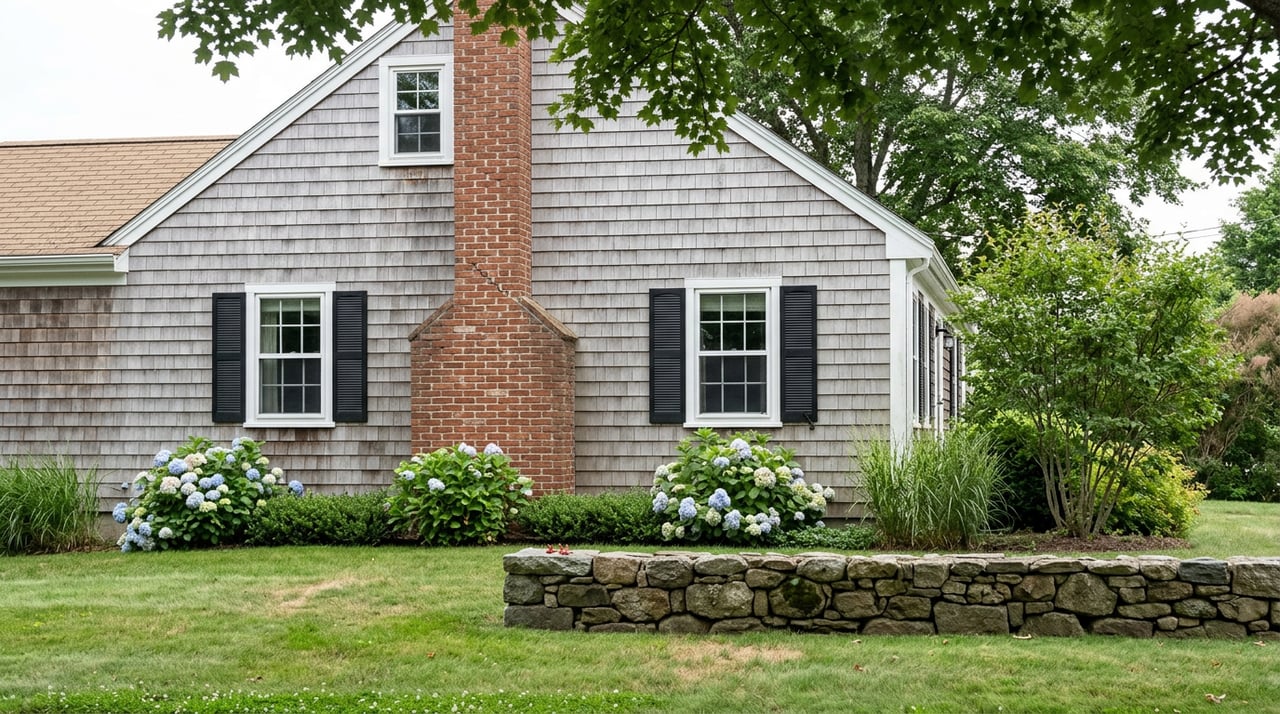
What Your Money Actually Buys Across Branford's Shoreline Villages
August 6, 2026
August 6, 2026
You have already seen the town-wide number. As of July 2026, Movoto puts Branford's median list price at $492,000, and Redfin's trailing three-month median sale for the 06405 zip sits at $339,000. Both are true. Neither will help you plan a purchase in Branford, because Branford is not one market.
It is five, and the spread between them is wider than most Shoreline towns of comparable size. The gap is not just about water views. It is about which private zoning association wrote the rulebook on your block, which FEMA panel your foundation sits on, and whether the cottage next door still empties out after Labor Day. Here is what that looks like village by village, and what actually drives the price difference once you get past the listing photo.
Recent Redfin and Homes.com neighborhood data tell a much sharper story than the town median:
That is a 3.7x range inside a single 22-square-mile town. A buyer who plans around the $339K sale-price median and shows up in Pine Orchard is looking at the wrong houses. A buyer who plans around the Pine Orchard median and only wants year-round living near the harbor is overpaying for a shape of life that Stony Creek delivers for less.
Pine Orchard is the highest median in town, and the water is only part of the reason. The village runs its own zoning district, separate from the Town of Branford's, and has since it developed as a waterfront resort community in the 1800s. The Pine Orchard Yacht and Country Club, founded in 1901, still anchors the neighborhood with a nine-hole course, tennis courts, an Olympic pool, and a 100-slip marina.
The transaction friction here is subtle but real. Because Pine Orchard has its own zoning commission with special-exception authority, any use that is not a straightforward single-family occupancy runs through a separate approval process. That includes short-term rentals: Branford's new town-wide Short-Term Residential Rental ordinance, effective March 1, 2026, explicitly carves out that Pine Orchard and Short Beach zoning districts must approve short-term rentals as a special exception through their own commissions before the town registration applies. A buyer counting on Airbnb income to offset a Pine Orchard mortgage is buying into a two-layer approval, not one.
That extra layer is part of what the price is buying. Buyers who want the private-club rhythm and the waterfront paths pay for the stability that layered governance produces. Buyers who want flexibility pay for it somewhere else.
Stony Creek's numbers look big at first glance. A trailing 12-month average sale price of $711,525 (Homes.com) puts it well above the town median. But that headline masks a 17% year-over-year decline in average sale price, and Homes.com currently shows a median list closer to $697,450.
The story underneath the numbers is a cottage stock in transition. Stony Creek was built as a granite-quarry village with seasonal cottages on tight lots, many of them within walking distance of the harbor and the Thimble Islands boat dock. Over the last two decades, a meaningful share of those cottages have been converted to year-round homes. The result is a housing mix where two homes on the same street can be structurally different animals: one is insulated for winter, has a modern septic, and prices like a full-time residence; the other still has three-season plumbing and prices like a summer place.
What your money buys in Stony Creek is proximity to a working harbor, the Thimble Islands tour docks, and a walkable village that runs on foot traffic in warm months. What it does not buy, without a careful inspection, is a guarantee that the cottage you love has actually made the conversion. That distinction is the single most common surprise in Stony Creek transactions.
Indian Neck's median sale price of $687,500 as of August 2025 was down 10.4% year over year, per Redfin. That is a notable drop in a coastal market that has held up elsewhere in the region. Read it carefully before you draw conclusions.
Indian Neck is a small sample. A handful of large waterfront trades in one twelve-month period can pull the median up; their absence the following year pulls it back down. What has not changed is the character of the housing: a waterfront enclave west of the town center with the historic summer-colony feel, a mix of classic cottages and larger shoreline homes, and a neighborhood identity shaped by clubs and associations. The recent softening is a data point, not a trend, and it does not shift the underlying story of what you buy here, which is proximity to Branford Point and the Branford River with a shorter walk to Main Street than either Stony Creek or Pine Orchard offers.
Short Beach's median around $499,500 tracks close to the town median, and that is the trap. On price per square foot, Short Beach often runs above the town average because so much of the housing stock is small.
The village sits at Branford's west end, has its own Short Beach Association and zoning district (the same carve-out that applies to Pine Orchard under the town's STRR ordinance), and hosts Short Beach Days each summer. Many of the homes started as seasonal cottages and now serve as year-round residences. The math that matters for a buyer: a converted cottage that adds insulation, a full HVAC system, and a code-current septic often costs more to carry than the sale price alone suggests, and the assessor's card may or may not reflect recent improvements.
What your money buys in Short Beach is a genuine beach-community rhythm at the lowest coastal-village entry point in town. What you have to underwrite is whether the specific house has finished its conversion or is still halfway through it.
Inland from the shoreline villages, the pricing shifts again. Branford Hills at roughly $327,500 sets the town floor. Branford Center, walkable to the Green, the James Blackstone Memorial Library, and the Shore Line East commuter rail station, prices somewhere between the inland and coastal ranges depending on whether the property is a condo near the Green or a single-family on a side street.
The center is where the commuter math shows up on the price tag. A buyer working in New Haven, eight to twelve miles west, is paying for the walk to the train, not the walk to the water. That is a different value proposition from every other village on this list, and it explains why condo inventory near the Green trades on days-on-market timelines closer to New Haven's than to the shoreline's.
Two mechanisms drive most of the spread between these villages, and neither shows up in a portal search.
The short-term rental ordinance. Branford's STRR ordinance took effect March 1, 2026, per town notice. The mechanics:
If you have been penciling out an investment purchase in Branford using pre-2026 Airbnb comparables, redo the math with the new registration, the host-residency rule, and, in Pine Orchard or Short Beach, the second approval layer.
Coastal insurance tiers. The town adopted the current FEMA Flood Insurance Rate Maps for New Haven County dated May 16, 2017, per Branford's floodplain management ordinance (§ 161-7). Two homes on the same street can price very differently because underwriters look at:
| Factor | Why it moves the premium |
|---|---|
| Distance to tidal water | Wind exposure during Nor'easters and hurricanes |
| FEMA zone (AE, VE, X) | Drives flood pricing and homeowners wind underwriting |
| Elevation | Low lots near the Sound get more scrutiny than higher ground a few blocks inland |
| Year built and roof age | A 1920s cottage with a 22-year-old roof rates very differently than a 2015 build |
Verify the parcel on the FEMA Flood Map Service Center before you offer, not after. A flood policy and a wind-tier assignment can change the annual carrying cost by thousands, and that number should be in your offer analysis from the start.
For the 06405 zip, the median sale price of $339,000 over the trailing three months is down 3.7% year over year per Redfin's May 2026 report, while Movoto's July 2026 list-price median of $492,000 is down 10% year over year. Median prices move on mix as much as on value, so read them alongside the per-square-foot number, which Redfin shows up 6.6% year over year.
That depends on what "near the water" means to you. Pine Orchard delivers private-club proximity and stable governance at the top of the price range. Stony Creek delivers a working harbor and a walkable village at a mid-range price, with cottage-conversion risk to underwrite. Short Beach delivers the beach-community rhythm at the lowest coastal entry point, with the same conversion risk.
No. The ordinance covers rentals of less than 30 consecutive days and more than 30 aggregate days per calendar year. Traditional annual leases fall outside it.
The Town of Branford's Planning and Zoning office runs the program through the town's OpenGov portal, with questions to [email protected].
The town median is a useful headline and a poor plan. If you are weighing Branford against Guilford, Madison, or Old Saybrook, the number that matters is not the one on the portal. It is the one that reflects the specific village, the specific FEMA panel, and the specific zoning overlay that will govern the house you actually buy. That is the work worth doing before you write an offer, and it is the work I do with every client. When you are ready to talk through a specific block or a specific property, Lisa Fekete is available to walk it with you. Schedule Your Complimentary Consultation.
Stay up to date on the latest real estate trends.
Luxury goes beyond square footage and price points. It’s about feeling supported, understood, and confident throughout the journey. Whether you’re purchasing, selling, or investing, you’ll receive thoughtful, goal-driven guidance, hands-on support from start to finish, and a new best friend in real estate you can rely on long after the closing.